The Difference Between Gravel Types (and When to Use Each)
Choosing the right type of gravel is essential for the durability, drainage, and long-term performance of your project. Not all gravel is the same, and using the wrong material can lead to issues like shifting surfaces, poor drainage, or premature failure. Whether you’re building a driveway, improving drainage, or enhancing your landscape, understanding gravel types helps ensure the job is done right the first time.
Below is a breakdown of the most common gravel types and when each should be used.
1. Crusher Run (Gravel Base)
Best for:
- Driveway bases
- Parking areas
- Roadways
- Heavy-use surfaces
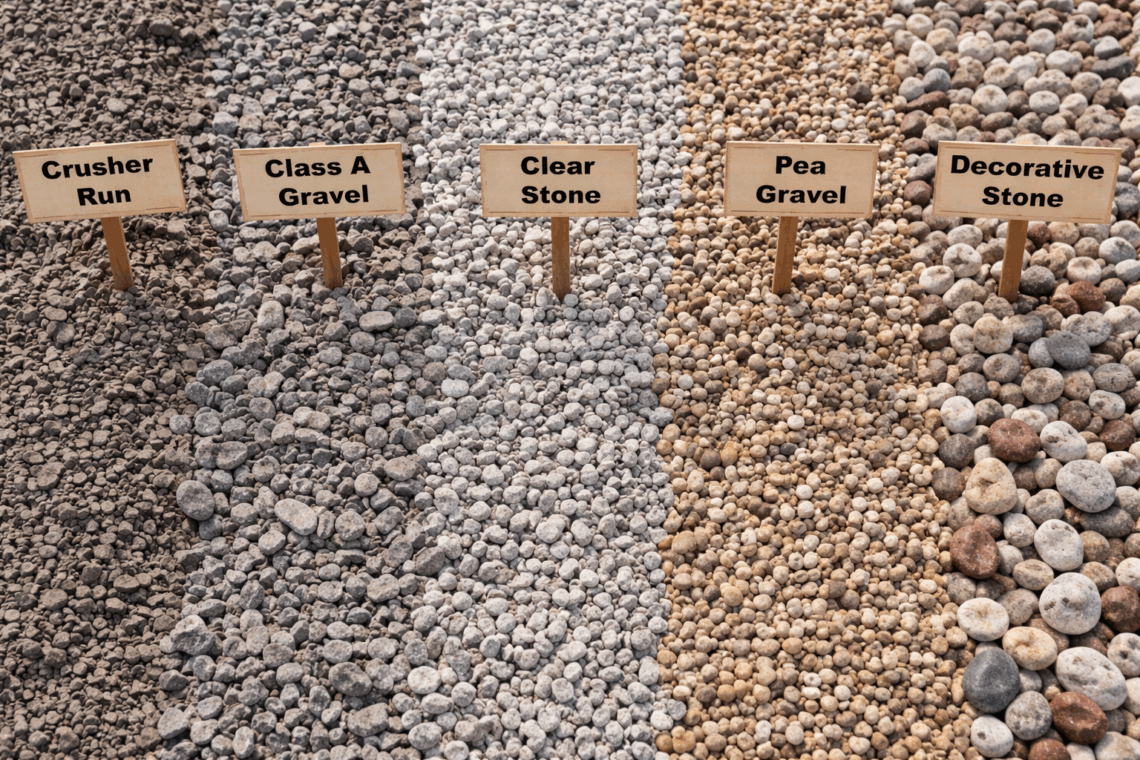
Crusher run is a blend of crushed stone and stone dust. Because the fine particles fill in the gaps between larger stones, this material compacts extremely well, creating a solid and stable base. It’s one of the most commonly used materials for driveways and is ideal for areas that will see vehicle traffic.
Why use it:
- Excellent compaction
- Strong load-bearing ability
- Long-lasting when properly installed
2. Class A Gravel
Best for:
- Driveways
- Walkways
- Parking areas
Class A gravel consists of crushed stone mixed with fines, similar to crusher run but often more uniform. It compacts tightly and provides a clean, professional finish. This is a popular choice for residential and commercial driveways where durability and appearance both matter.
Why use it:
- Smooth, compact surface
- Good drainage
- Low maintenance
3. Clear Stone (Drainage Stone)
Best for:
- Drainage systems
- French drains
- Foundation backfill
- Wet or low areas
Clear stone contains little to no fines, which allows water to flow freely through it. Because it doesn’t compact tightly, it’s not ideal for driveways, but it’s essential for drainage applications where water needs to move away from structures.
Why use it:
- Excellent water flow
- Prevents pooling and erosion
- Ideal for drainage solutions
4. Pea Gravel
Best for:
- Decorative landscaping
- Walkways
- Garden areas
Pea gravel is made up of small, rounded stones. While it looks great and feels comfortable underfoot, it doesn’t lock together like crushed stone. This makes it unsuitable for driveways or high-traffic areas.
Why use it:
- Attractive appearance
- Easy to walk on
- Great for low-traffic areas
5. Decorative Stone
Best for:
- Landscaping features
- Borders and edging
- Accent areas
Decorative stone comes in various sizes and colors and is used mainly for visual appeal rather than structural support. It’s commonly used around gardens, trees, and walkways to add contrast and curb appeal.
Why use it:
- Enhances landscaping
- Low maintenance
- Long-lasting appearance
Choosing the Right Gravel Matters
Using the correct gravel type is just as important as proper grading and installation. Factors such as traffic load, drainage needs, and soil conditions all play a role in determining which material is best for your project. In many cases, combining multiple types—such as a compacted base with a finished gravel surface—delivers the best results.
At Ritchie’s Renovations & Excavating, we help property owners choose the right materials and install them properly to ensure long-term performance, stability, and appearance.
Need Help Selecting Gravel for Your Project?
If you’re unsure which gravel type is right for your driveway, drainage, or landscaping project, our team is happy to help. We provide expert advice, quality materials, and professional installation to get the job done right.